AEO: Why AI Readiness Is the Next Frontier for Your Website
AI Readiness
SEO
Optimisation
What Is AEO and Why Should You Care?
Search is changing faster than most businesses realise. While SEO has been the standard for getting found on Google, a new discipline is quietly becoming just as important: AEO - Answer Engine Optimisation.
AEO is the practice of structuring your website so that AI-powered tools - like ChatGPT, Google's AI Overviews, Perplexity, and Copilot - can not only find your site, but understand it, trust it, and recommend it in response to real user questions.
If someone types "who is the best web design agency in Australia?" into an AI engine, AEO determines whether your business gets mentioned or completely ignored.
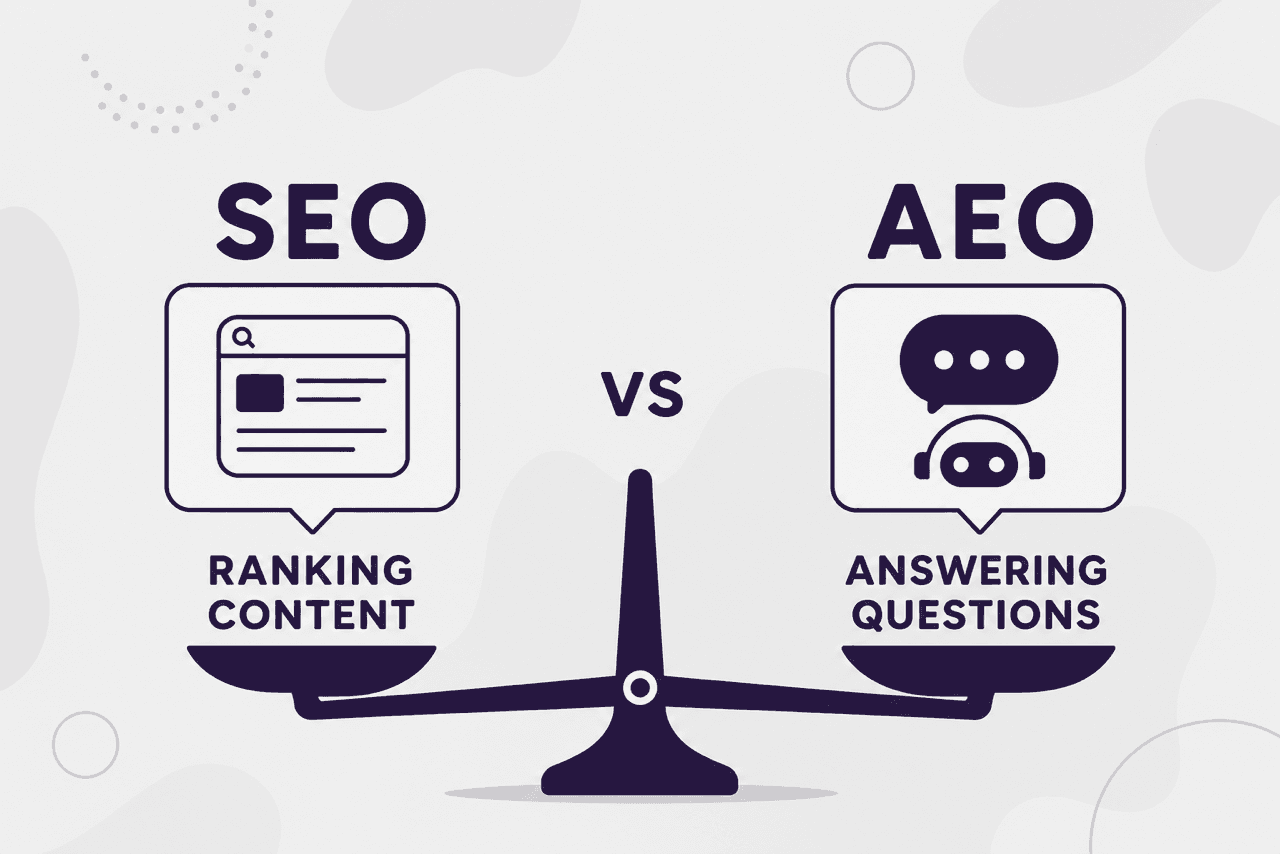
SEO vs AEO: What's the Difference?
SEO optimises your site for search engine rankings. AEO optimises your site for AI understanding and citation.
They work together, but they're not the same thing. A site can rank well on Google and still score poorly on AEO because AI engines don't just read keywords. They look for signals that tell them what your business is, who it serves, why it's credible, and how to describe it accurately to a user asking a question.
The key signals AI engines look for:
Structured data (JSON-LD): tells AI what type of business you are, what services you offer, and where you operate
Clear headings: a logical H1 and hierarchy that signals what each page is about
Quotable content: well-written, factual sentences that AI can extract and cite
Trust signals: consistent business information, reviews, and authoritative content
Open Graph tags: ensure your pages are understood when shared or referenced
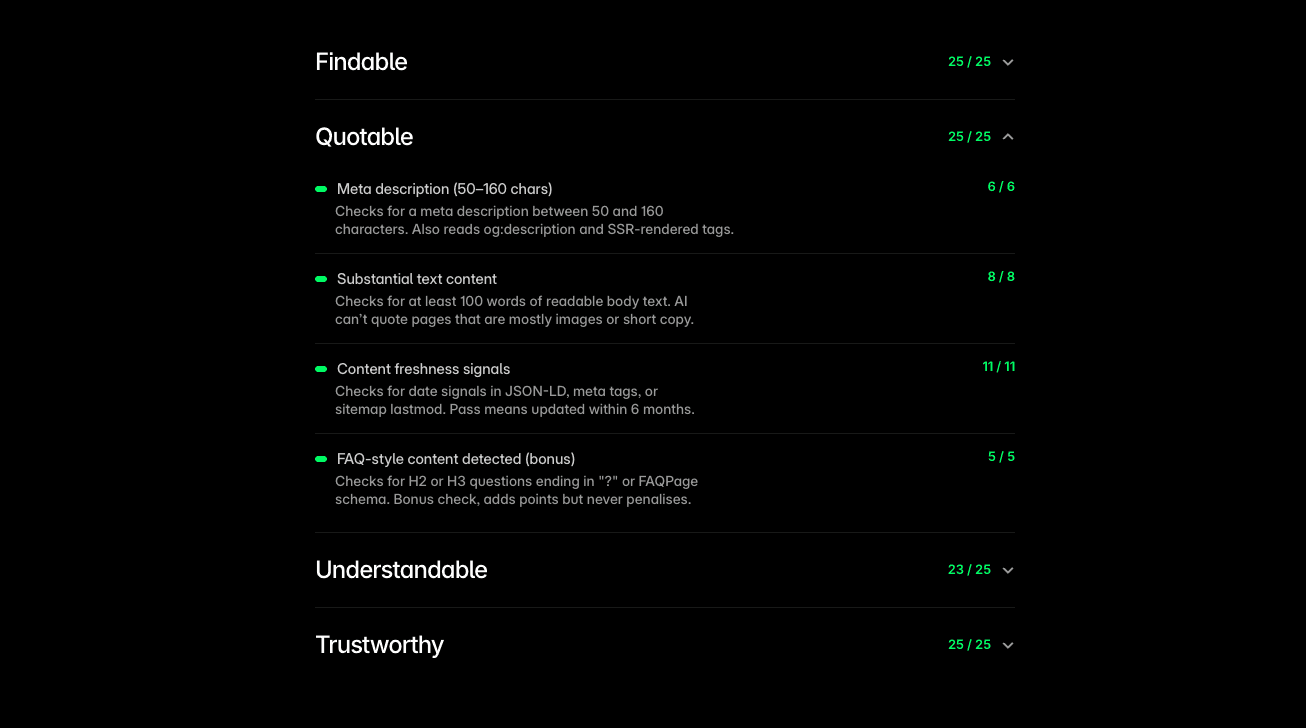
Studio Vora quotable example using Framer AEO score tool
The Score That Revealed Everything
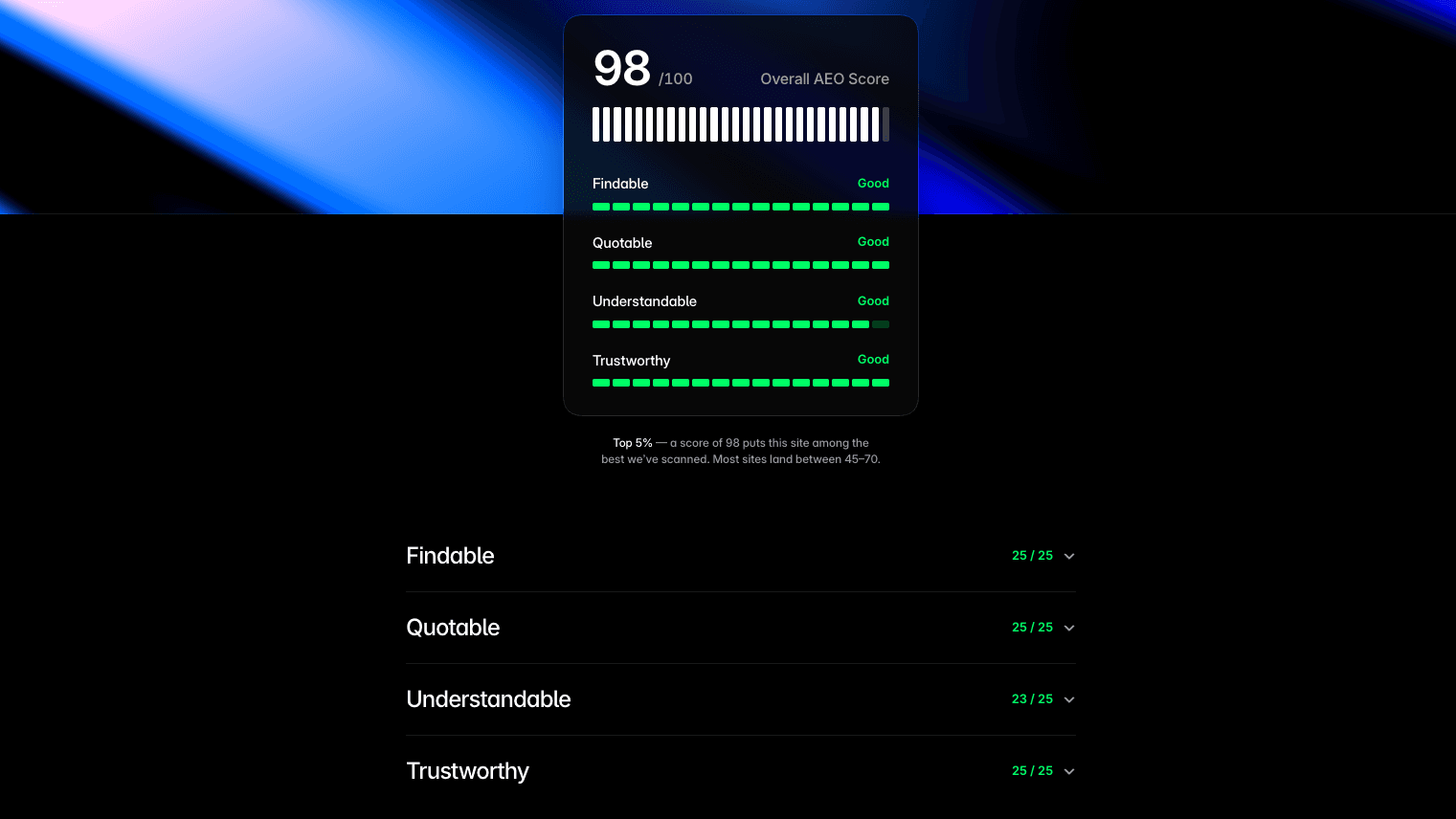
We recently ran Studio Vora's own website through Framer's AEO tool - a free tool that scores your site across four dimensions: Findable, Quotable, Understandable, and Trustworthy.
The result? 89/100 overall. Top 15% of all sites tested.
But one category stood out: Understandable scored 14/25 and the culprit was a single missing element: structured data (JSON-LD).
Every other signal was strong. But without structured data, AI engines couldn't fully categorise our content type, understand our services, or confidently recommend us in response to relevant queries.
The fix? Adding JSON-LD schema to each page - a behind-the-scenes block of code that speaks directly to AI crawlers in a language they understand.
Studio Vora results after structured data optimisation: 98/100 - Top 5% of all sites tested.
What Is JSON-LD and Why Does It Matter?
JSON-LD is a snippet of structured code added to your website's <head> tag. It doesn't change how your site looks but it dramatically changes how AI and search engines interpret it.
For a web agency like Studio Vora, that means telling AI engines:
We are a ProfessionalService based in Australia
We offer website development, SEO, brand identity, and ongoing support
We serve clients in Australia, New Zealand, the US, UK, South Africa, and Singapore
We build on Framer, Webflow, and WordPress
Without this, AI has to guess. And when AI guesses, it often gets it wrong or skips you entirely.
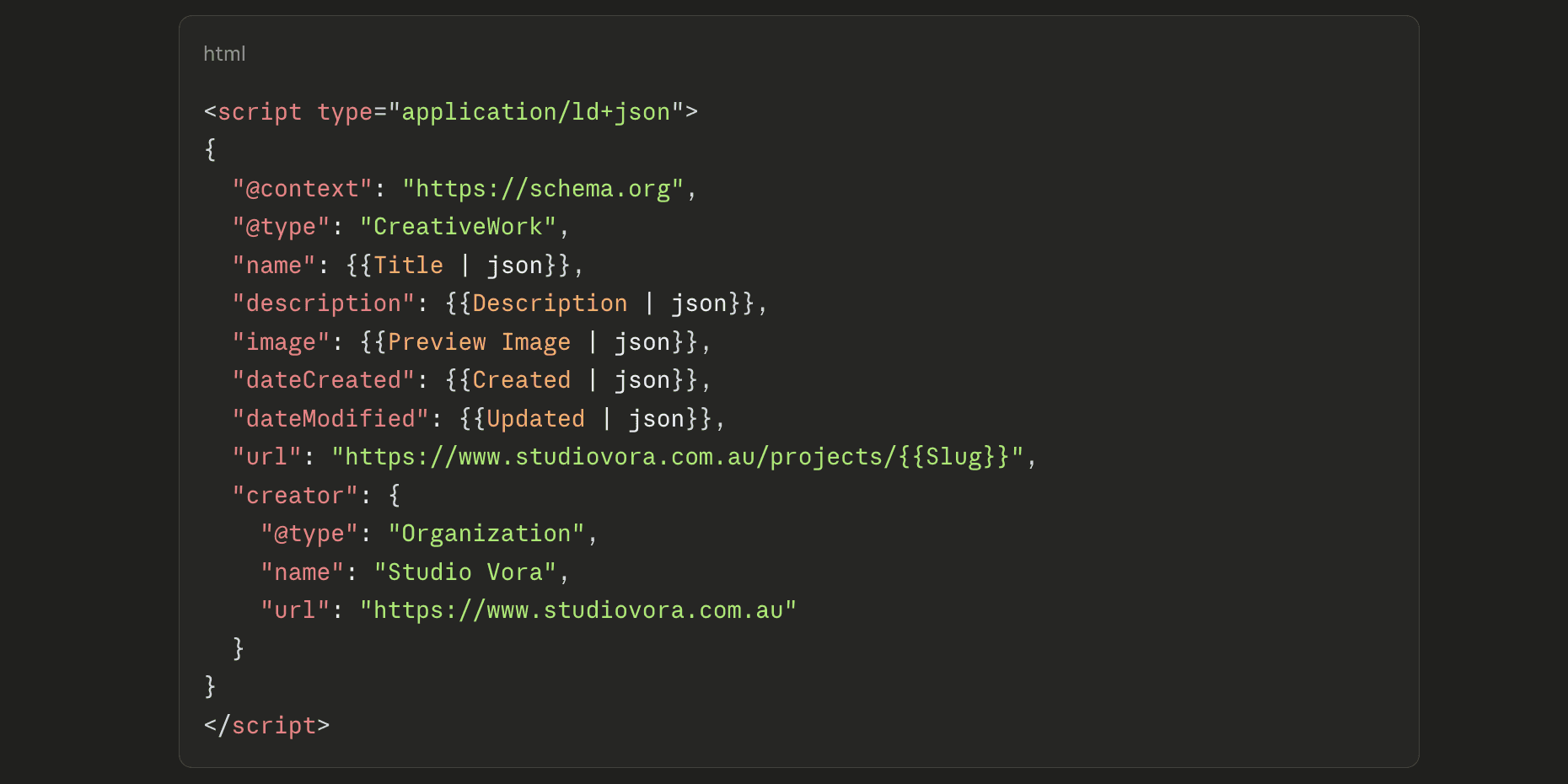
Example for JSON-LD
How to Make Your Website AI-Ready: The Essentials
Here's what every business website should have in 2026:
1. Organisation schema on your homepage Tells AI who you are, what you do, your contact details, and where to find you across the web.
2. Service schema for your offerings Makes each service individually understandable and searchable - including platforms, locations, and outcomes.
3. Article schema on blog posts Enables your content to be cited as a source by AI engines when users ask relevant questions.
4. Open Graph tags Already standard on most modern sites - ensures accurate representation when your pages are referenced or shared.
5. Clean heading structure A single, descriptive H1 per page with logical H2s and H3s beneath it. AI reads your headings to understand page intent.
6. Descriptive alt text on images At least 50% of your images should have meaningful alt text, not just "image1.jpg."
The Opportunity Most Businesses Are Missing
Most websites were built for Google in 2018. The web has moved on.
AI-powered search is already handling millions of queries that never result in a Google click. If your website isn't structured for AI understanding, you're invisible to an entire (and rapidly growing) channel of discovery.
The good news: most of these fixes are technical, not creative. You don't need to rewrite your entire site. You need the right structure in the right place.
At Studio Vora, AI readiness is now part of every website we build and audit. Because getting found isn't just about ranking anymore, it's about being understood.
Want some help closing the AI readiness gaps? Get in touch with us.